
Multimeter Resolution vs Accuracy: How to Read the Specifications

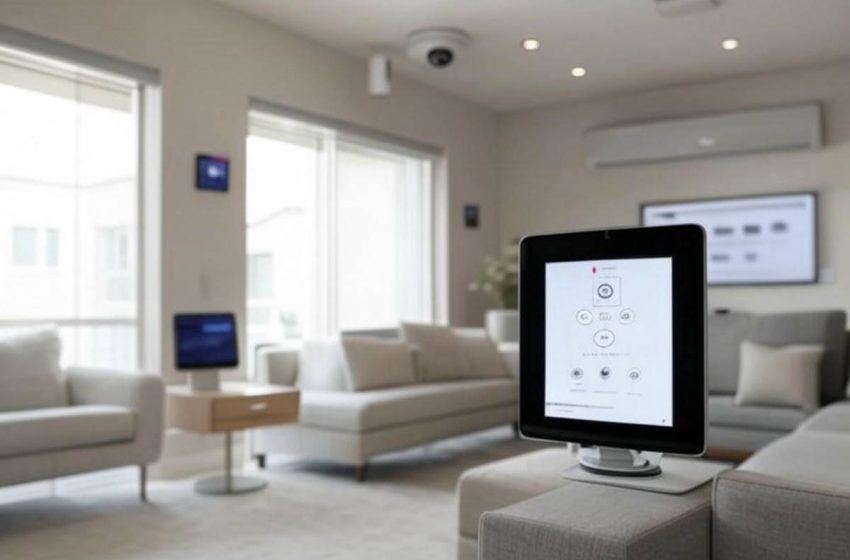
Smart Home Devices for Homebuyers: What to Check
Published: May 5, 2025
Last Updated: November 19, 2026
Last Updated: November 19, 2026
Smart home devices can make some household tasks more convenient, but their value depends on how they work in the property—and whether a new owner can use them securely. A connected thermostat, lock, or doorbell is not automatically a reason to pay more for a home.
For buyers, the useful questions concern compatibility, condition, subscriptions, privacy, and ownership transfer. For sellers, a documented and transferable setup is more useful than a long list of features that only work through a personal account.
This article is part of
Phones & Wearables
Table of Contents
Start with what is actually included
“Smart home” can describe anything from a few connected bulbs to an integrated collection of heating, lighting, access, and monitoring systems.
Ask for an inventory identifying:
- The devices and exact model numbers.
- Their locations and main functions.
- Hubs, controllers, bridges, and other required equipment.
- Power supplies and network connections.
- Apps, accounts, and subscriptions.
- Manuals, setup information, and support details.
- Which items are intended to remain.
Do not assume that a device visible during a viewing is included in the sale. Confirm inclusions and exclusions through the transaction’s written process, with advice appropriate to the jurisdiction.
An inspection of the physical property and an assessment of connected-device functions also answer different questions. Ask what any agreed inspection actually covers.
Evaluate features by the problem they solve
Thermostats and energy controls
A connected thermostat may provide scheduling and remote control, but first check that it suits the installed heating and cooling equipment.
Ask:
- Can it be operated directly without a phone?
- Which functions require an account or connection?
- Is installation documented?
- Are relevant sensors or controllers included?
- Is software support still available?
- What happens if the online service is unavailable?
For US products, ENERGY STAR’s smart-thermostat guidance provides a more useful basis for energy claims than the word “smart.” Certified models are assessed using real-world field data. That does not promise the same savings in every property.
Do not confuse remote control with efficiency. The equipment, settings, household routine, and building all matter.
Locks, cameras, and video doorbells
These devices can provide supported access and monitoring functions, but they introduce responsibilities as well as convenience.
For hardware-selection questions, our guide to Wi-Fi and smart camera doorbells provides related context. For an installed system, focus on the actual model and setup.
Check:
- How normal entry works.
- What happens during a power, battery, or network problem.
- Whether keys or other supported backup access are available.
- Who can view recordings or change settings.
- Whether storage or alerts require payment.
- How accounts and permissions will be transferred or removed.
NIST recommends strong account protection, including unique passwords, multifactor authentication where available, and regular updates. A connected camera does not remove those responsibilities.
Also consider where cameras point and what they record. Check applicable privacy and recording requirements rather than assuming every existing placement is appropriate.
Lighting, blinds, appliances, and cleaning devices
A demonstration is more useful than a feature label.
Ask to see ordinary actions performed using the controls that will remain: operating a light, adjusting a blind, starting an appliance, or changing a schedule.
Establish what works:
- Through the device’s physical controls.
- Through a local controller.
- Through the manufacturer’s app.
- Through a third-party platform.
- Only with an online service or subscription.
For portable products such as robot vacuums, confirm whether the equipment is included at all. A photographed appliance is not the same as a documented sale inclusion.
Do not assume that every connected appliance has better energy performance or needs less maintenance than a non-connected alternative.
Check compatibility without relying on logos alone
A home may contain products bought at different times for different platforms. The fact that each device works individually does not establish that all features can be managed together.
What Matter does—and does not—establish
Matter is a smart-home connectivity standard intended to improve interoperability. However, the specific device type, supported functions, controller, and platform still need checking.
The Connectivity Standards Alliance explains that Matter is a local connectivity technology. Remote access to Matter-only devices requires an internet-connected controller in the home. Matter-over-Thread devices also need an appropriate Thread border router, which may be built into other equipment.
Therefore, do not assume:
- Every Matter device needs no supporting equipment.
- Every feature appears identically in every platform.
- The seller’s controller will remain.
- Local control and remote access have the same requirements.
Ask for a demonstration using the equipment and accounts the buyer will actually have after completion.
Network reliability and offline operation
Check the connection where installed devices are located, including entrances, upper floors, garages, and outdoor areas.
Document what happens when internet access is unavailable. Some local functions may continue; others depend on cloud services. Do not generalise from one device to the whole property.
A working demonstration on the seller’s network does not establish that every setting will survive a router replacement or account change.
Calculate the continuing cost
The purchase price of the hardware is only part of ownership.
| Cost or dependency | Question to ask |
|---|---|
| Subscription | Which functions disappear without payment? |
| Batteries | What type is required, and how accessible is replacement? |
| Consumables | Are filters, bags, or other supplies needed? |
| Network equipment | Does the setup require a hub, bridge, or controller? |
| Support | Is there a published update policy or support period? |
| Repairs | Are parts and qualified servicing available? |
| Online service | What remains usable if the service is withdrawn? |
Request current information for the exact model. A feature that once came free may not have the same terms for a new owner.
Avoid valuing the system solely from what the seller originally paid.
Do not let gadgets distract from the property
Connected controls do not resolve underlying defects.
The condition of the building, electrical and plumbing systems, heating, ventilation, and other essential services remains important. Arrange appropriate professional assessment where needed.
The same applies outdoors. Landscaping, drainage, garden maintenance, and the condition of patios or other structures deserve attention independently of connected lighting or irrigation.
Inside, buyers may prioritise layout, workspace, storage, bathrooms, flooring, or decoration differently. Open-plan rooms and neutral colours are not universal requirements.
For sellers, compare the usefulness of a technology upgrade with necessary repairs and maintenance. Do not assume that adding devices is the best use of every pre-sale budget.
Treat resale claims cautiously
A statement that buyers like a feature is not proof that it produces a particular price premium.
For example, Security.org’s page identifies its smart-home shopping research as a 2021 survey. Its stated preferences should not be treated as a current valuation study or a guarantee of achieved selling prices.
Be cautious with claims that connected homes sell a fixed percentage faster or for a predictable premium unless the underlying research identifies:
- The market and period studied.
- The properties compared.
- What counted as a smart home.
- How other property differences were addressed.
- Whether the result concerns preferences, asking prices, or completed sales.
For an individual property, obtain relevant local advice rather than relying on a general technology statistic.
Plan ownership transfer before completion
A device attached to a wall can still belong to someone else’s account.
Ring, for example, explicitly says that physically uninstalling a device or deleting its app does not release ownership. It also says removing a device does not automatically cancel the subscription. These are manufacturer-specific rules that illustrate why handover needs planning.
Follow each manufacturer’s current process rather than applying one universal reset procedure.
Seller checklist
- Confirm which devices and supporting equipment remain.
- Provide model details and relevant documentation.
- Preserve any records that need to be retained before deletion.
- Follow the manufacturer’s account-removal or transfer process.
- Remove personal permissions, shared access, and integrations as instructed.
- Deal separately with subscriptions and billing.
- Coordinate resets so essential controls remain usable.
- Do not hand over the password to a personal email or cloud account.
Ring’s moving guidance provides an example of the checks required for its products; other brands may use different procedures. 2282
Buyer checklist
- Register supported devices to accounts you control.
- Use unique passwords and multifactor authentication where available.
- Review all users, permissions, access codes, and integrations.
- Confirm the previous owner no longer has access.
- Install available updates.
- Review recording and retention settings.
- Test everyday controls and documented fallback operation.
- Keep setup and recovery information secure.
NIST’s consumer guidance recommends reviewing privacy settings and enabling automatic updates where appropriate.
If a device cannot be released, supported, or used as expected, resolve that issue rather than assuming a factory reset will fix every problem.
Conclusion
Smart home devices matter when they provide useful, dependable functions that the new owner can understand and control.
Evaluate the installed equipment, supporting infrastructure, ongoing costs, privacy, and transfer process. For sellers, clear documentation and an orderly handover are more credible than unsupported promises of a higher price.
The most valuable connected home is not necessarily the one with the most devices. It is one whose technology suits the household without obscuring the condition and responsibilities of the property itself.