
How Branded Highlighters Can Keep Your Business Front of Mind?

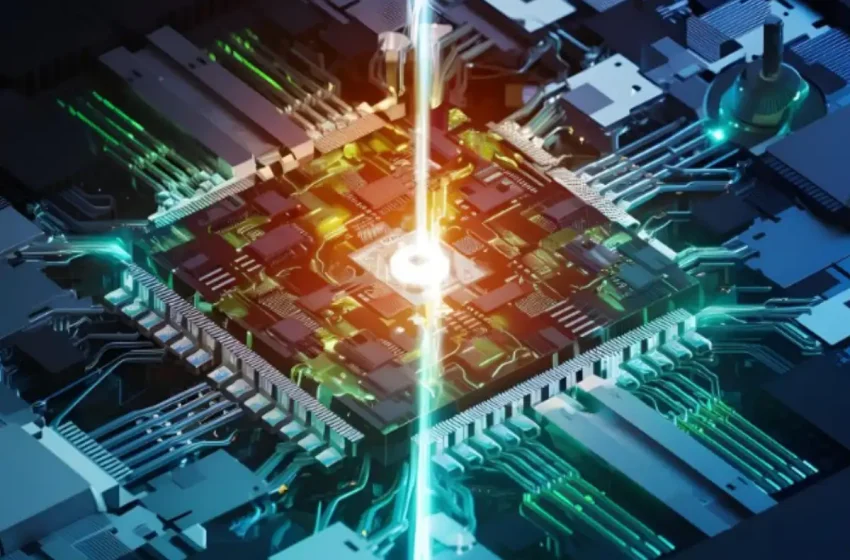
RISC vs CISC Processor for Government IT Modernization
Government bodies, like enterprises, have legacy systems that hold you back. So, changing hardware becomes a necessity. However, that’s where important questions pop up regarding the hardware.
One such question leads you to make a decision: RISC architecture vs CISC architecture. It depends on your operations, the speed you want, and the complexity of each task. As a government IT professional, the choice can make or break your career. So, we give you an unbiased opinion.
Table of Contents
What is RISC?
RISC or Reduced Instruction Set Computing, utilizes a small set of instructions, simple and of fixed length. It follows the basic rule of “load, operate, store” by breaking down a long and complex function into several steps, each completed in a single clock cycle.
Each instruction, therefore, goes into the pipeline, which is easier and more efficient. There are more general-purpose registers and fewer addressing modes, too. The hardware is simpler, with less power consumption.
However, the RISC advantages over CISC end there; we get disadvantages for any complex functionality. The instruction sets are more for complex operations, and the memory needed is greater.
What is CISC?
CISC, which stands for Complex Instruction Set Computing, uses a large set of instructions that are complex and of variable length. Multiple operations are performed in a single instruction, which takes up more than one clock cycle.
While each program is small, instruction sets are large and take some time to create the intended output. General-purpose registers are fewer in number, with multiple formats of data. More operations are carried out in memory.
Addressing modes are also more complex. Code size is smaller due to the complexity of instructions. You even experience efficiency in memory usage. However, greater power consumption and complexity in their design make it difficult to produce and use them.
Which Architecture Do You Use?
It can be difficult for government IT employees to analyze the difference between RISC and CISC processors. The best way is to use the formula below:
CPU Time = Seconds/Program = Instruction Count × CPI × Clock Cycle Time = Instruction/Program x Cycle/Instruction x Seconds/Cycle
With CISC, the number of instruction sets used for each program is less, but at the cost of CPI, due to instruction complexity. On the other hand, RISC decreases CPI with simple instructions, but the number of instructions per program is higher.
CISC requires complex hardware while RISC depends more on software. If you need speed and performance, choose RISC; if you need compatibility, CISC is your friend. Desktops and servers utilize CISC more, while IoT and tablets make use of RISC.
RISC vs CISC processors is a comparison between ARM, SPARC, and RISC-V, and x86, Motorola 68K, and VAX. Legacy systems often utilize CISC architecture, so modernizing them, keeping sustainability in mind, may require a shift to RISC for certain devices.
A government office has both sides, so ensure that what you choose for each device makes sense.
Concluding Remarks
Choosing hardware and software for a governmental department is always tough, but necessary. Quick modernization is impossible, so you need a fast approach that will preserve your workloads until you transform. If you want a Solaris, OpenVMS, Tru64 UNIX, or HP-UX emulator, Stromasys can help you.